+8801939912301
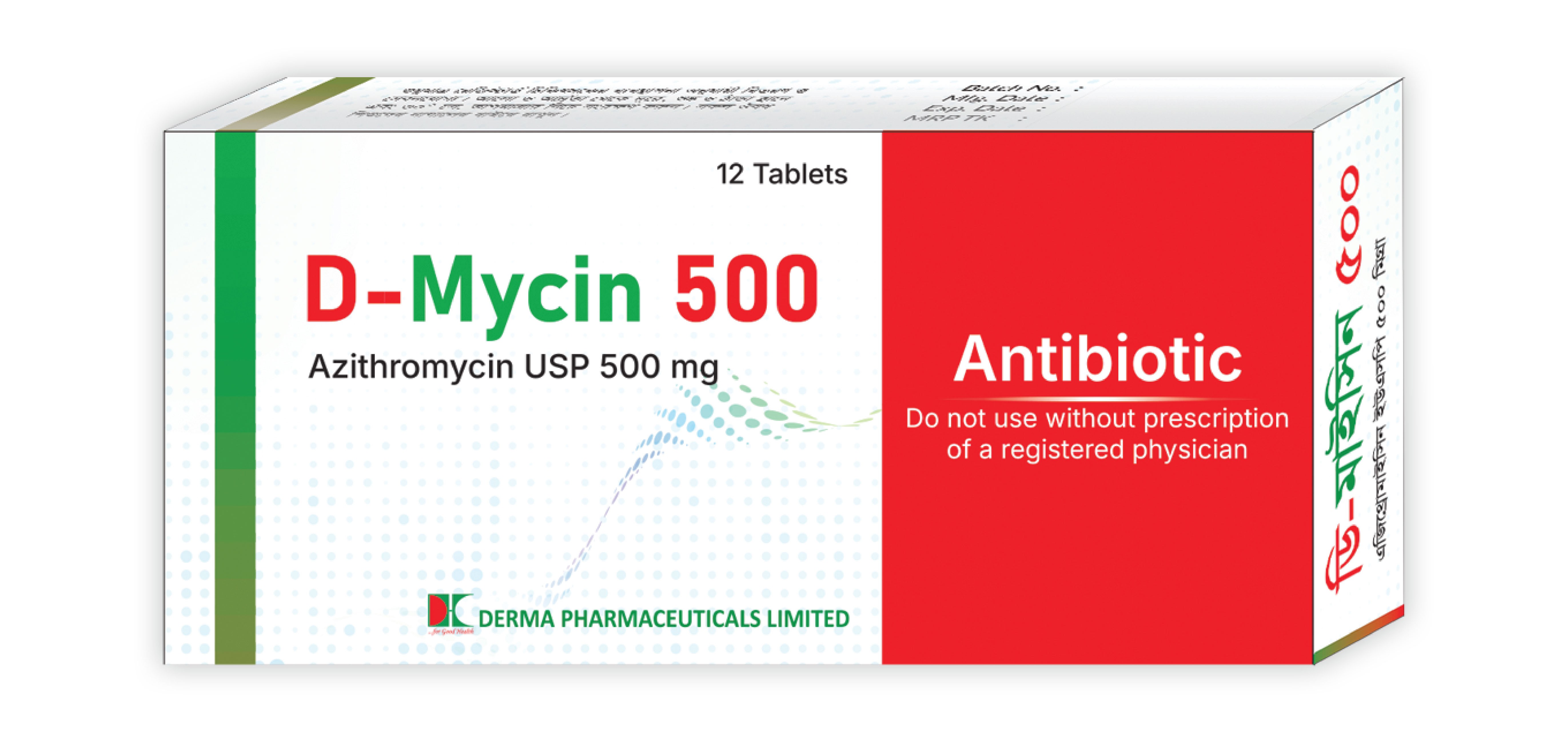
D-Mycin 500 mg
Generic Name:
Azithromycin
Composition:
Each D-Mycin 500 mg Tablet contains Azithromycin USP 500 mg.
Pharmacology:
Azithromycin is a broad-spectrum macrolide antibiotic with a long half-life and a high degree of tissue penetration. It belongs to the azalide subclass of macrolides and binds to the 50S ribosomal subunit of bacteria, inhibiting bacterial protein synthesis by blocking the translation process.
Indications:
Azithromycin is indicated for the treatment of:
• Respiratory tract infections
• Otitis media
• Skin and soft tissue infections
• Diarrhoea
• Cholera
• Typhoid fever
• Uncomplicated genital chlamydial infections
• Non-gonococcal urethritis
• Gonorrhea
Dose & Administration:
Upper Respiratory Tract Infections:
Includes pharyngitis, tonsillitis, acute bacterial sinusitis and acute otitis media.
• Adults: 500 mg once daily
• Alternatively, 500 mg on Day 1 followed by 250 mg once daily for the next 4 days
• Children: 10 mg/kg once daily
• Duration of therapy: 3 days
Lower Respiratory Tract Infections:
Includes community-acquired pneumonia, acute bacterial exacerbations of chronic obstructive pulmonary disease (COPD) and bronchitis.
• Adults: 500 mg once daily
• Alternatively, 500 mg on Day 1 followed by 250 mg once daily for the next 4 days
• Children: 10 mg/kg once daily
• Duration of therapy: 3 days
Acne:
• 500 mg once daily for 3 days, followed by a 4-day interval
• Duration: 8–12 weeks (more effective)
Skin / Skin Structure Infection:
• Adults: 500 mg once daily
• Children: 10 mg/kg once daily
• Duration: 3 days
Genital Ulcer Disease:
• Adults: 1 g as a single dose
Non-Gonococcal Urethritis and Cervicitis:
• Adults: 1 g as a single dose
Gonococcal Urethritis and Cervicitis:
• Adults: 2 g as a single dose
Typhoid / Paratyphoid:
• Adults: 1 g once daily
• Children: 20 mg/kg once daily
• Duration: 5 days
Diarrhoea:
• Adults: 1–1.5 g once daily
• Children: 20 mg/kg once daily
• Duration: 1–3 days
Cholera:
• Adults: 1 g as a single dose
• Children: 20 mg/kg as a single dose
Shigellosis:
• Adults: 1–1.5 g once daily
• Children: 20 mg/kg once daily
• Duration: 1–5 days
Dental Infection:
• Adults: 500 mg once daily
• Children: 10 mg/kg once daily
• Duration: 3 days
Eye Infection:
• Adults: 1 g as a single dose
• Children: 20 mg/kg as a single dose
Contraindications:
• Hypersensitivity to Azithromycin or any of the macrolide antibiotics
• Co-administration with ergot derivatives should be avoided
Side Effects:
Gastrointestinal side effects may occur, including:
• Nausea
• Vomiting
• Diarrhoea
• Flatulence
• Loose stool
• Minor abdominal cramps
Warning & Precaution:
• Caution should be taken in patients with renal impairment.
• Caution should be exercised in patients with ventricular tachycardia.
Drug Interactions:
Azithromycin may interact with:
• Antacids
• Ergot derivatives
• Digoxin
• Cyclosporine
• Warfarin
• Theophylline
• Carbamazepine
• Methylprednisolone
• Cimetidine
The insert also states that absorption of Azithromycin is reduced by 50% in the presence of food in the stomach.
Use in Pregnancy & Lactation:
• Pregnancy Category B.
• The insert states that Azithromycin is recommended for use during pregnancy.
• It is not known whether Azithromycin is secreted in breast milk.
• Caution should be exercised when Azithromycin is administered to nursing or lactating mothers.
Overdose:
There are no specific data available on overdosage with Azithromycin. Typical symptoms of overdosage with macrolide antibiotics may include:
• Hearing loss
• Severe nausea
• Vomiting
• Diarrhoea
Gastric lavage and general supportive measures are indicated.
Storage:
• Store below 30°C.
• Protect from light and moisture.
• Store in a dry and cool place.
• Keep out of reach of children.
Dosage Form:
Film-coated Tablet
Commercial Packaging:
Each box contains 12 tablets in an Alu-Alu blister pack.